Saturday, April 19, 2008

Stylish Purse Carriers For Your Puppy


Pet Carriers With Style And Summer Flare

Is your puppy ready to go to the beach with you? You have a towel, sunglasses and sundress, but have you considered a dog carrier?

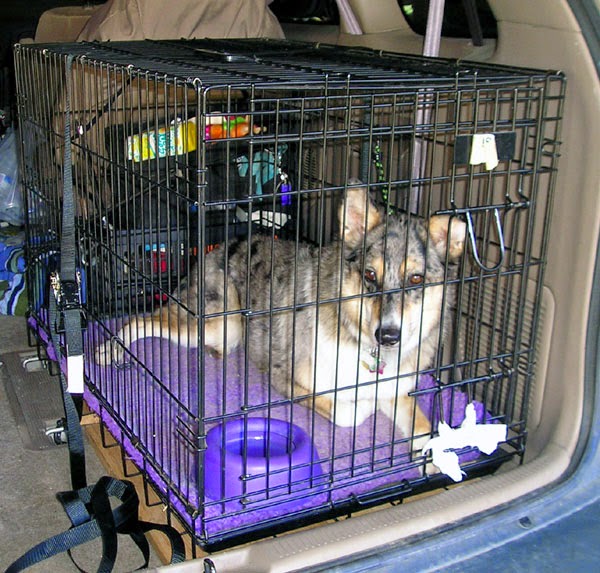
Dog carriers have come a long way since the plastic crate we used to use. While I still suggest a heavy crate for going to the veterinarian and other 'business' trips, a purse style carrier is a fun way to bring your puppy with you for a fun day!

The bag pictured is great for bigger puppies, holding dogs up to 15 pounds. With tall sides and plenty of interior room, your dog will love this style of travel. Both sides are made from heavy-duty mesh for plenty of ventilation.

This is a very well made bag by East Side Collection, with heavy straps and zippers to withstand the travels of your dog.

Look for quality first when buying a tote travel bag for your pet. You may pay more, but quality is always worth it. Pet bags should have a collar clip inside to secure your pet for safety.

The beach doggy bag pictured above is $39.95 and available by contacting:
DogsRuleIowa


Monday, April 14, 2008

Walking Your Dog For Exercise


Think of your dog as a free personal trainer

Does the phrase “walk the dog” mean someone needs to open the back door at your house? We all need to exercise more and your dog gives you the perfect opportunity to work out.

Dogs naturally enjoy walking. There is a huge difference between walking your dog and letting it run around free in a fenced backyard.

Allowing your dog to ‘free-range’ is great in conjunction with a regular supervised leash walk. Dogs are migratory pack animals by nature, and are genetically built for walking at a steady pace daily. Not walking your dog daily is like giving your pet nothing to do, ever. Which usually is begging for trouble as a bored dog will chew, dig holes, climb fences… anything fun!

There could be no better personal trainer than your dog. What other personal trainer is going to treat you to a fresh air walk every day and curl up on your feet every night? No more getting yelled at by a big muscle-y person. When it’s time to walk, your dog simply looks (stares) at the leash and at you (and at the leash and at you, and at the leash and at you) until you have to make a decision. Walk or get a cat.

Once the decision is made (I assume that you are still a dog owner), the correct leash is critical. Do not use a long leash or extension leash for this type of walking. An extension leash is really only for dog parks and other large public areas that allow dogs. This article will help you choose the correct size leash:

Choosing the Right Leash for Training Your Puppy or Adopted Older Dog

For beginner leash training, refer to this article:

How To Leash Train Your Excited Puppy or Older Dog

When you are comfortable walking your dog in your yard, with your dog staying next to your hip or right behind you, you’re ready to go for a real fitness walk.

Like any exercise, start with repetitions of small distances. Think about the age and fitness of your dog, as well as yourself. Very young and very old dogs can’t walk long distances, and you probably can’t make them.

If I walk too far for my dog, he lays down and the walk is over for a while. At this point I can wait it out, or combine weightlifting into my fitness program and carry him home.

Start with short distances and gradually increase, remember it’s a round-trip. If you get tired before your dog, it may start to lead you and pull at the leash. This needs to be corrected immediately. Pull the leash taut to your waist and force the dog to walk at your speed. If your pet continues to pull the leash, slow down further (stop if you have to). Keep your pet right at your side, no matter what has its attention.

Your dog should follow you at all times, you are in control of the walk and the pace. If you have to slow down, your pet should automatically slow down. If you have trained your puppy well, it will go into an almost trance-like state when you are walking. Your dog will follow you anywhere (calmly) in this state. As (the dog whisperer) Cesar Millan says, “You are the pack leader”.

If your pet is in front of you, it is making all of the decisions (in its puppy brain). This is a huge opportunity for a puppy or dog that wants to see and smell everything right now. Since most dogs have short attention spans when left on its own, your pet will pull you all over the neighborhood.

Leash training your dog can’t be stressed enough.

After a short training session or two, you can have your own personal fitness trainer for the price of a bag of good dog kibble.

Reference
www.cesarmillaninc.com

Sunday, April 13, 2008

My Puppy’s First Training: The Sit Command

Train Your Dog To Sit Down When You Say, “Sit”

Training a puppy how to sit when you tell it to is one of the first things every new dog owner needs to learn.

Training should be a bonding experience for you and your puppy. If this is going to be your first dog training experience, this article may help you get off to a good start:

Preparing My Puppy For Obedience Training

Now let’s head to the dog training area that you have chosen and get started!

Put the dog on a collar and leash during training, you want to be in complete control at all times. (Leave all choke chains and other restraints to professionals.)

Get your dog’s attention

It’s always good to start with what the puppy already knows. In the above mentioned article, we covered the “look” command. So get your pet in training position and practice whatever training commands they already know (even if it is just looking at you).

Now that you have learned how to get and keep your pet’s attention, get the dog to look at you. This will signal the puppy that training is about to start.

Give no treat for the dog coming to attention, that is no longer the entire goal.

1.) Kneel down facing the puppy and slightly to the side, depending on the size of the dog. You need to be able to reach both head and tail.

Unhook the leash at this point.

2.) Hold one hand slightly above the dog’s collar (like a gymnast’s spotter), and the other hand above the dogs hindquarters.

3.) Now say your command “Sit”
State your command one time only in what should become your dog training tone. Your pet should be looking directly at you. Use a low, firm tone and be quick about it.

4.) Immediately after giving the training command, run your hand over the dog’s hindquarters and ease your pet into a sitting position. If you do this motion in a smooth pressured stroke, many dogs will sit on their own.

Do not fight or excite the puppy in any way during training. If nothing happens, and you are dealing with a Mastiff, start from step 1. Make sure that you have the dog’s full attention. State your command slightly louder this time.

5.) Once the dog sits down with little or no assistance, give a small piece of dog treat and a quick pat on the head. Then go right back into repetition.
Bring the puppy back to attention before every repetition. Remember, you have not given a release command yet.

6.) After the final repetition of the training session, bring the puppy back to attention. Have your pet look directly at you and hold your gaze, then say your release command (“Ok“, or “all done” will work, but use the same command every time). Give the puppy a piece of treat and leave the training area.

Try to train several times a day in short increments. Dogs love to train because all of the attention is on them.

After every training session, there should be a little playtime. Make sure you have some room to move around, get down on the ground or floor and really bond with your puppy. This is always the best treat, have fun!


Saturday, April 12, 2008

Preparing My Puppy for Obedience Training

How to Get Your Dog's Attention and Keep It

There is a difference between teaching your dog acceptable behavior and training your dog to obey commands.

Acceptable domestic behavior for a dog includes house training, crate training, leash training and proper social behavior. These are the first steps that need to be completed prior to obedience training or 'trick' training.
Finish Article Now


How to Leash Train Your Excited Puppy or Older Dog

Does your puppy sit down, back up or pull to shake loose of the leash? Or worse yet, does your older dog pull you down the street at breakneck speed when you put the leash on its collar? A few simple training sessions can help you walk your dog safely on a leash.
Finish Article Now


Choosing Dog Toys that Will Keep Your Puppy Happy and Safe

Checking puppy toys for safety issues is almost as important as checking baby toys. Puppies have sharp teeth growing in and need to chew. Most dog-toy manufacturers understand this. However, proper safety precautions are not always taken at the factory level.

Finish Article Now

Monday, April 7, 2008

Choosing the Right Leash for Training Your Puppy or Adopted Older Dog

By Christine Cameron, published Apr 07, 2008

Before you start leash training your puppy, make sure that you are using the proper equipment. Do not start with an extension leash; these are strictly for playtime walking. Your puppy or newly adopted older dog needs to understand that the person holding the leash is in charge of the walk direction and pace.


Finish Article